Quick answer
Pokhara is famous for hosting the most accessible views of 8,000-meter peaks in the world—the Annapurna range rises 7,000 vertical meters within 30 kilometers of the city center. Phewa Lake anchors the lakeside district, where the reflection of Machapuchare (Fishtail Mountain) became the defining image of Nepali tourism. The city serves as the gateway to the Annapurna Circuit and Annapurna Base Camp treks, drawing 300,000 trekkers annually, and operates as South Asia's paragliding capital with year-round tandem flights launched from Sarangkot.
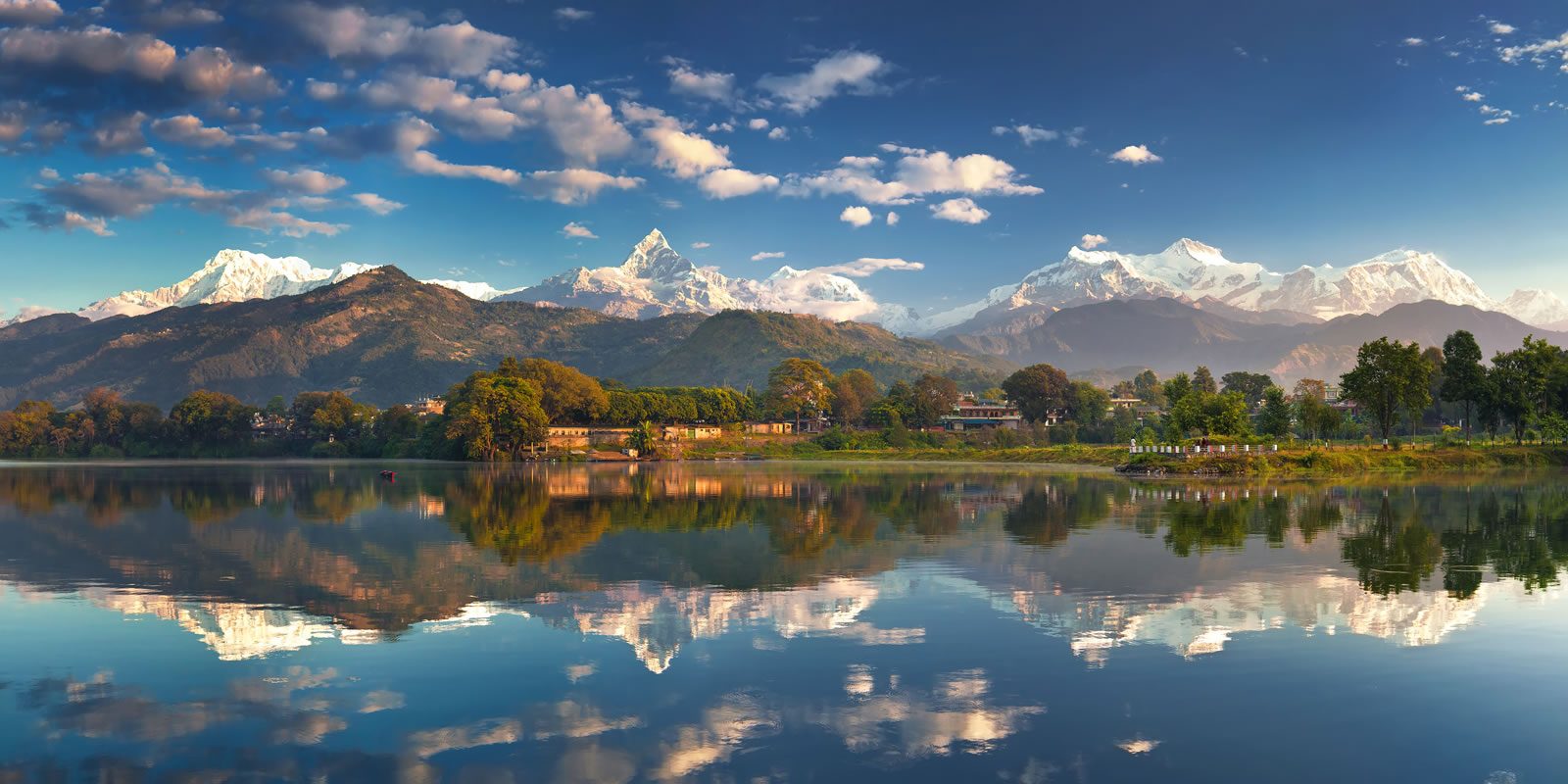
The Annapurna massif contains three peaks above 8,000 meters—Annapurna I (8,091m), Dhaulagiri (8,167m), and Manaslu (8,163m)—all visible from Pokhara's northern vantage points on clear mornings. No other city on Earth positions so many extreme-altitude summits within a single sight line from such low elevation. The proximity creates atmospheric phenomena: dawn light strikes the peaks 30 minutes before reaching the valley, painting the snow faces pink while the city below remains in shadow.
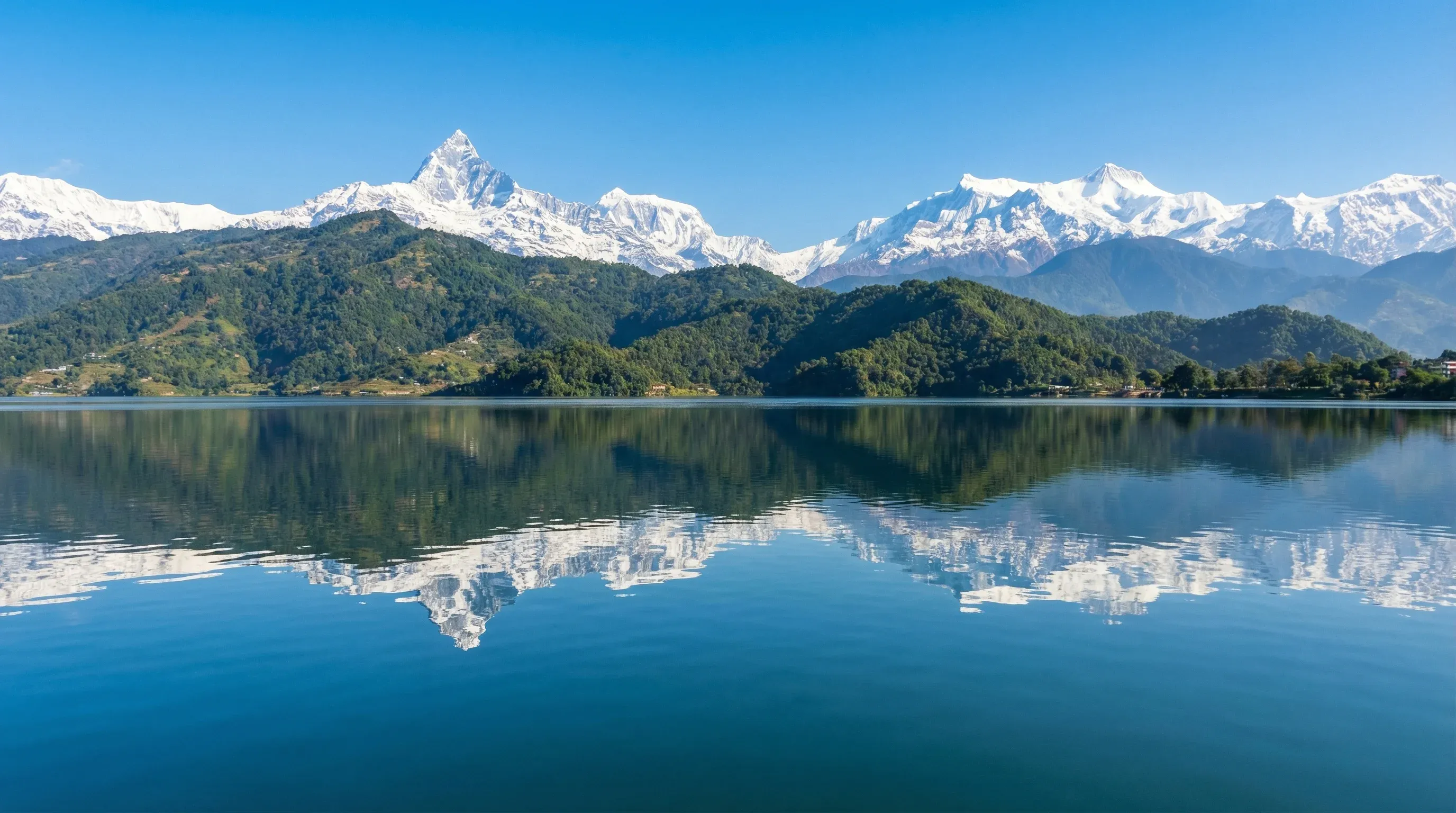
Phewa Lake stretches 4.4 kilometers along Pokhara's eastern edge, its western shore lined with the lodges, cafes, and booking offices that form the Lakeside district. The lake's southern end holds Tal Barahi Temple, a two-story pagoda on an island reached by wooden rowboats. The water's stillness on windless mornings produces the postcard reflection of Machapuchare, the unclimbed 6,993-meter peak whose double summit resembles a fish tail. This single view—lake, temple island, and mountain mirror—became the visual shorthand for what is Pokhara famous for in global tourism.
The trailheads for Nepal's most-walked routes begin within an hour's drive. The Annapurna Base Camp trek starts from Nayapul, 42 kilometers west, and reaches 4,130 meters over ten days. The Annapurna Circuit, a 230-kilometer loop crossing Thorong La pass at 5,416 meters, also departs from the same region. Pokhara's guesthouses, gear shops, and trekking agencies evolved to service these routes, and the city now processes 70 percent of all permits issued for the Annapurna Conservation Area.
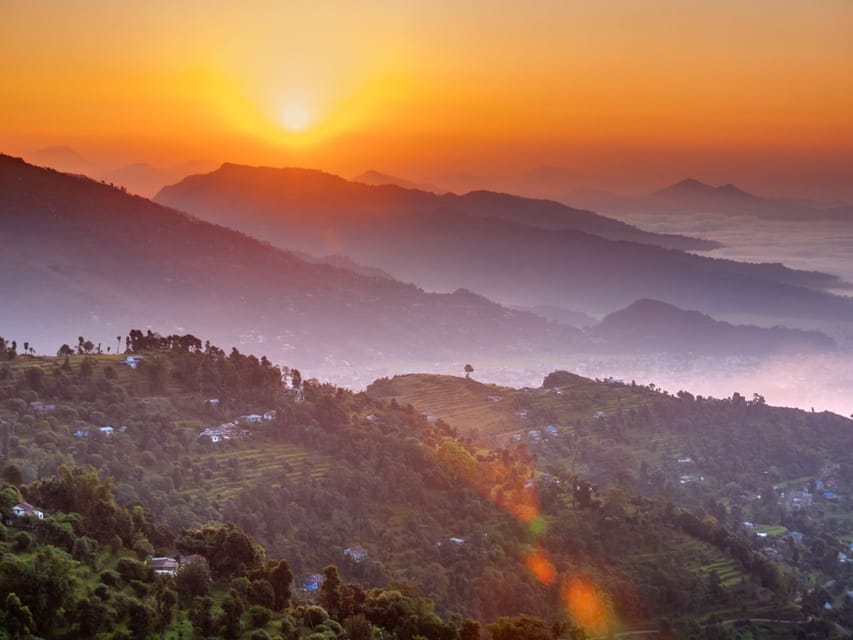
Adventure tourism anchors the local economy. Sarangkot, a ridgeline 1,600 meters above the valley, launches 15,000 tandem paragliding flights each year—pilots use the thermal currents rising from Phewa Lake to stay aloft for 30 to 45 minutes. The same ridge serves sunrise viewpoint visitors who arrive before dawn to watch the Annapurna range emerge from darkness. Bungee jumping, zip-lining, ultralight flights, and white-water rafting on the Seti River diversified the offerings after 2010, but the mountains remain the gravitational center of the Pokhara famous attractions list.
What makes Pokhara special operationally is compression: extreme elevation, deep water, and launch-ready infrastructure occupy a 15-kilometer radius. A visitor can paraglide at sunrise, paddle Phewa Lake by mid-morning, and book a trek departure for the next day—all without changing neighborhoods. The city's fame rests less on a single monument than on this functional density, a base camp that never closes.